Key takeaways
- Passive watching rarely works; you need structure to actually improve listening and vocabulary.
- Watch with dual subtitles so you can compare the original and translated lines without breaking your listening rhythm.
- Focus on whole sentences first, then look up one or two unknown words inside that context.
- Repetition beats translation: replay 3 to 5 second clips, listen twice before reading, and shadow aloud.
- Start with vlogs, sitcoms, and interviews; avoid slang-heavy crime dramas and dense documentaries early on.
A lot of people say, "Just watch Netflix in your target language."
In theory, that sounds great. In practice, most learners either pause every 20 seconds to translate, turn on subtitles in their native language and stop paying attention, or give up because it feels too difficult.
Watching can absolutely help -- but only if it's structured correctly.
This guide explains how to actually learn a language by watching -- in a way that improves listening, vocabulary, and comprehension.
Why Watching Can Be Powerful for Language Learning
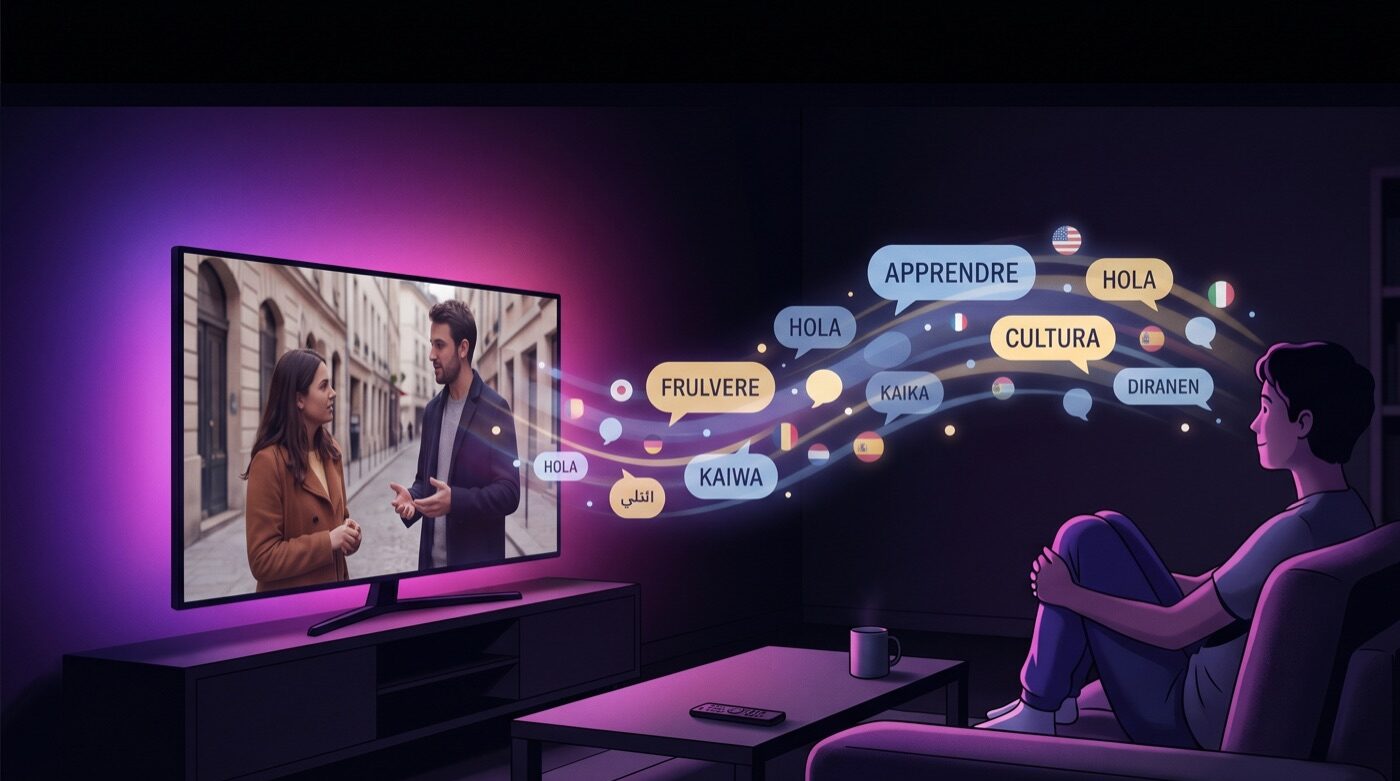
Watching shows provides three things traditional learning methods often lack:
- Real pronunciation
- Natural sentence structure
- Emotional context
When you hear words in conversation tied to tone, facial expression, and real situations, your brain builds stronger memory associations. This is called contextual language learning.
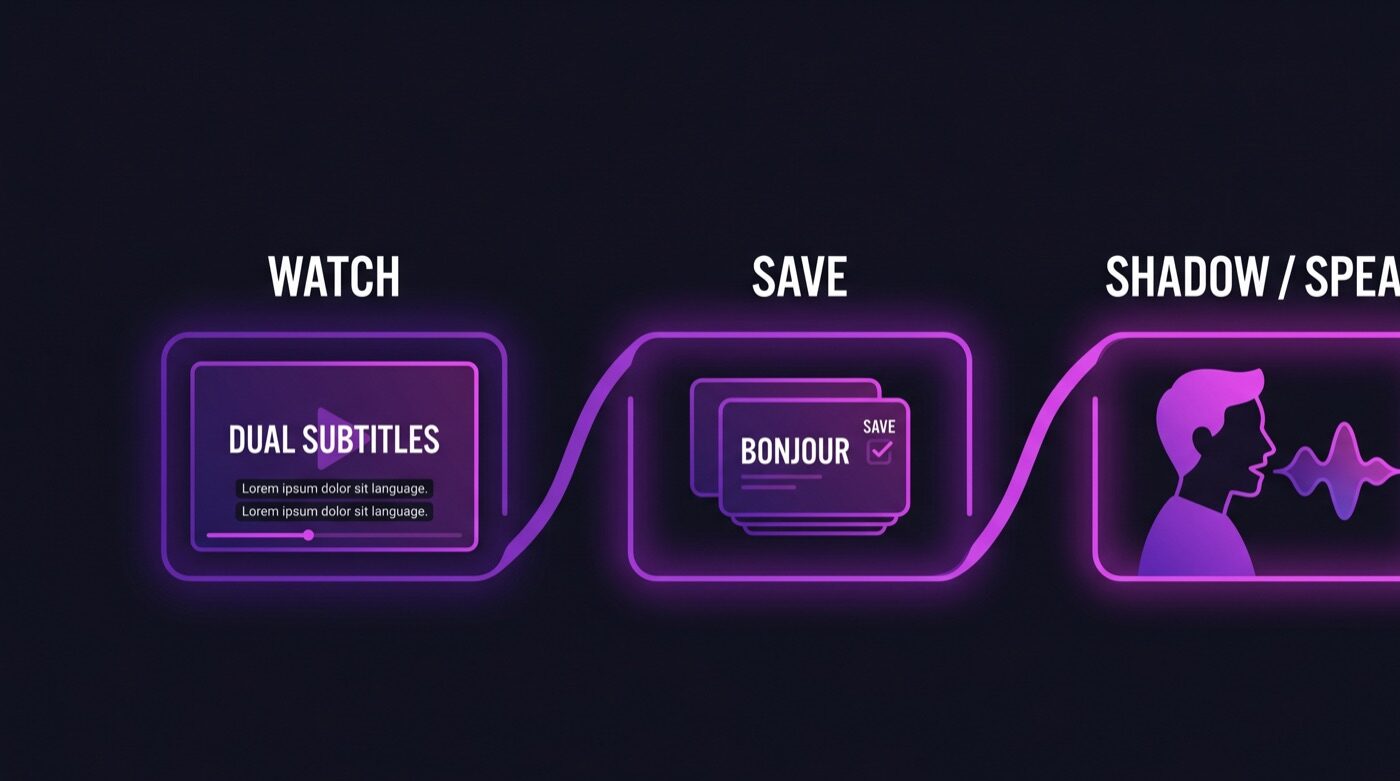
The 3-Layer Method for Learning From Shows
- 1
Watch with dual context
See the original and translated lines together for instant comparison.
- 2
Save new words
Capture unfamiliar words in context with one click as you watch.
- 3
Repeat & shadow
Replay key lines and say them aloud to lock in pronunciation.
- 4
Review spaced
Revisit saved vocabulary over days so it sticks for good.
1. Watch With Dual Context (Not Just Subtitles)
Use both subtitles -- but intentionally. See the original line and the translated line together. This allows instant comparison without breaking listening rhythm.
The key is: Read quickly, return to listening immediately. Over time, you'll rely less on translation.
2. Focus on Sentences, Not Single Words
Most learners make the mistake of translating word-by-word. But language doesn't function word-by-word. Understand the full sentence first, then examine 1-2 unknown words inside context.
3. Repetition Beats Translation
- Replay short 3-5 second clips.
- Listen twice before looking at translation.
- Try shadowing (repeat what you hear aloud).
Choosing the Right Content Level
Start with:
- Vlogs
- Sitcoms
- Interviews
- Everyday conversations
Avoid:
- Crime dramas with heavy slang
- Political debates
- Historical documentaries
A Realistic Weekly Plan
Consistency matters more than duration.
Final Thoughts
Watching won't magically make you fluent. But when structured correctly, it becomes one of the most natural and sustainable ways to learn.
That's real progress.
About the author
Team Funlingo